Design & Adhesive Logic
in Mouth Tape
A private label buyer guide to shape, edge hold, adhesive behavior, removal feel, and sample confirmation.
Mouth tape is not just a flat patch with glue. Small differences in shape, opening size, adhesive layout, material route, and edge behavior can change how the product feels on the mouth. For private label buyers, design and adhesive logic should be tested together before customization and bulk production.
Adhesive Strength Is Only One Part of the Product
A stronger adhesive may improve security, but it can also increase removal pull, beard concerns, and perceived pressure.
A gentler adhesive may improve removal comfort, but it may not create the strongest locked-in feeling.
The final user experience depends on how adhesive behavior works with shape, size, material, edge design, opening structure, and product route.
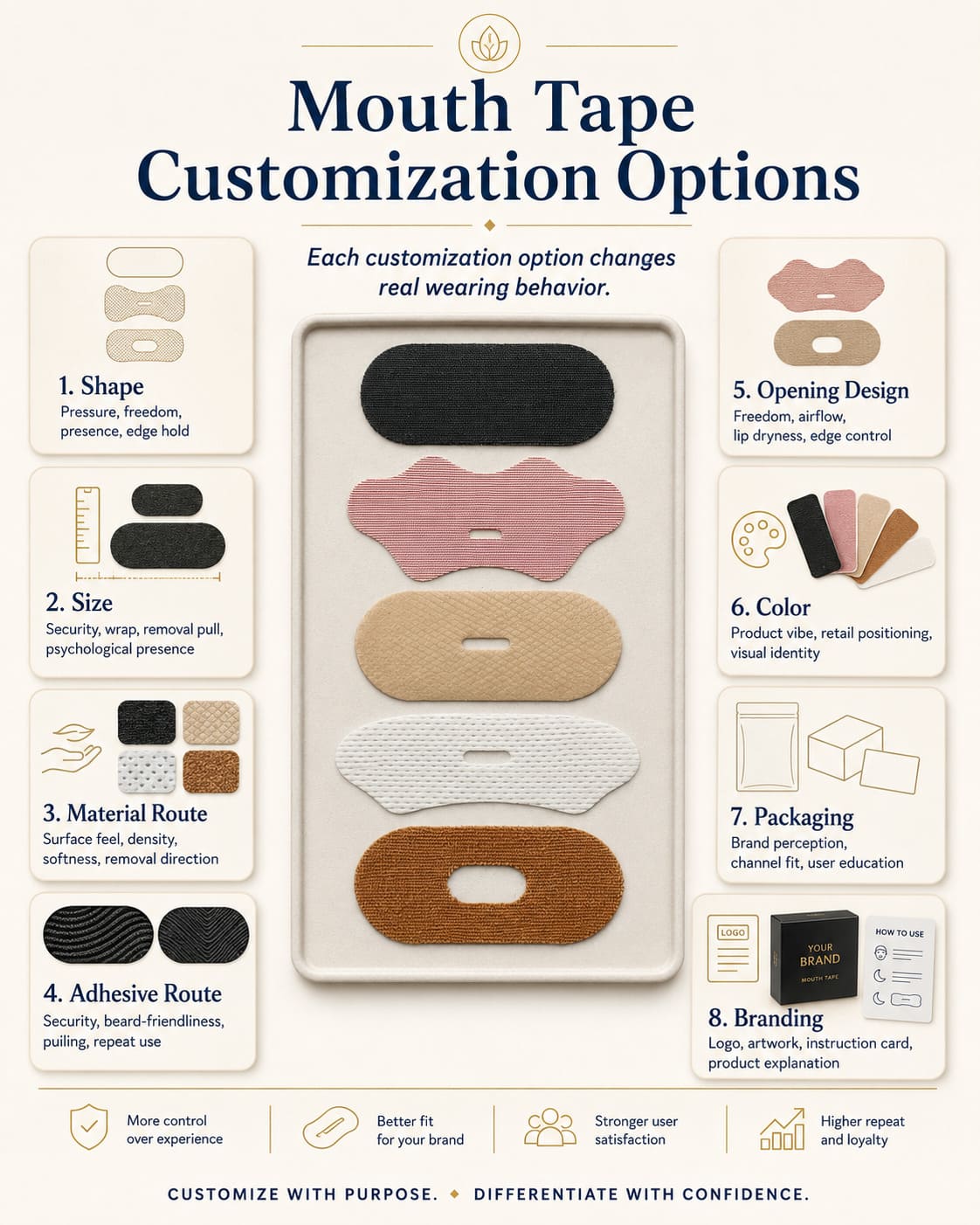
Design and Adhesive
Work as One System
For mouth tape, design choices and adhesive choices cannot be separated. A product may look soft but feel strong if the adhesive layout is aggressive. A product may look secure but feel acceptable if the material, edge design, and removal profile are balanced.
Buyers should evaluate together:
Coverage, Pressure, and Presence
Shape affects how the product sits around the mouth -- coverage area, pressure distribution, edge stability, and the user's sense of presence all change with shape.
Full Coverage
May create stronger visual reassurance and broader surface contact. Can support both low-pressure and strong-hold routes depending on material and adhesive behavior.
Open-Center
May increase central mouth freedom, but it changes edge control and airflow behavior. Requires different adhesive logic at the perimeter.
Lip-Shaped Contour
May reduce unnecessary coverage and lower perceived presence, but needs careful edge design during mouth movement.
Dual-Zone Structure
May separate center behavior from perimeter behavior, creating a more differentiated product story with distinct adhesive zones.
Compact Strip
Minimal footprint with focused adhesive contact. Suitable for lower-presence positioning and first-time user onboarding.
Skin-Patch Style
Positions the product closer to a skincare or wellness patch. Typically softer edges, refined adhesive, and premium material route.
Hold, Release, and User Acceptance
Adhesive behavior is not only about stronger or weaker glue. The full picture includes how the product holds during wear, how it releases during removal, and how the user perceives it night after night.
Adhesive behavior can affect:
Questions a private label buyer should ask:
Should the product feel relaxed or secure on the mouth?
Should removal feel soft or controlled?
Does the target user have beard concerns?
Should the patch stay stable during small mouth movement?
Is the product for first-time users or experienced users?
Edge Behavior During Real Mouth Movement
Mouth tape should not be judged only when the mouth is still. A patch that looks stable on a flat surface may behave differently around the mouth. Edge design and adhesive layout determine whether the product feels calm, secure, restrictive, or unstable.
Light Talking Motion
Small lip movements during partial wakefulness. Edge should remain stable without lifting or creating tension.
Lip-Pursing
Tests edge adhesion under horizontal lip compression. Reveals how the perimeter responds to shape change.
Facial Expression Changes
Wider skin movement around the mouth area. Tests whether the patch conforms or creates a pulling sensation.
Small Chewing Motion
Vertical jaw movement with skin stretch. Identifies edge lifting risk and adhesive resilience under stress.
Side Tension
Lateral mouth stretch. Corner adhesion and edge design are most critical here for preventing peel-back.
Edge design and adhesive layout together determine whether the product feels calm, secure, restrictive, or unstable during real use.
Full Coverage vs Open-Center Adhesive Logic
These two design directions require different adhesive thinking. The table below helps buyers understand the trade-offs before requesting samples.
Removal Feel and Beard-Friendliness
Removal feel is part of the product experience. For some buyers, a strong hold is important. For others, repeat-use acceptance and easier removal may matter more.
Gentle removal is not simply weak adhesive. It is a design route that depends on material, adhesive release profile, edge design, and target user expectations.
Evaluate these removal factors:
Does removal feel smooth or harsh?
Does the adhesive pull facial hair?
Does the product leave residue?
Does the edge lift cleanly?
Does the user want to use it again the next night?
Which Design and Adhesive Route Should a Buyer Test First?
Use the cards below to identify the starting direction for your product. Each card maps a buyer priority to a suggested design and adhesive route for sample testing.
First-Time User Acceptance
Lower-presence shape, softer adhesive feel, relaxed full-coverage route.
Stronger Security Feeling
Broader footprint, stronger edge hold, more controlled full-coverage route.
More Mouth Freedom
Open-center or lip-shaped route with careful opening and edge testing.
Gentle Removal / Beard-Friendly
Softer release profile, silicone or skin-patch style route, removal-focused testing.
Premium Retail Positioning
Smoother material route, refined contour, balanced adhesive behavior, polished packaging story.
Functional Secure-Hold Line
Stronger adhesive behavior, clear application guidance, sample confirmation before bulk order.
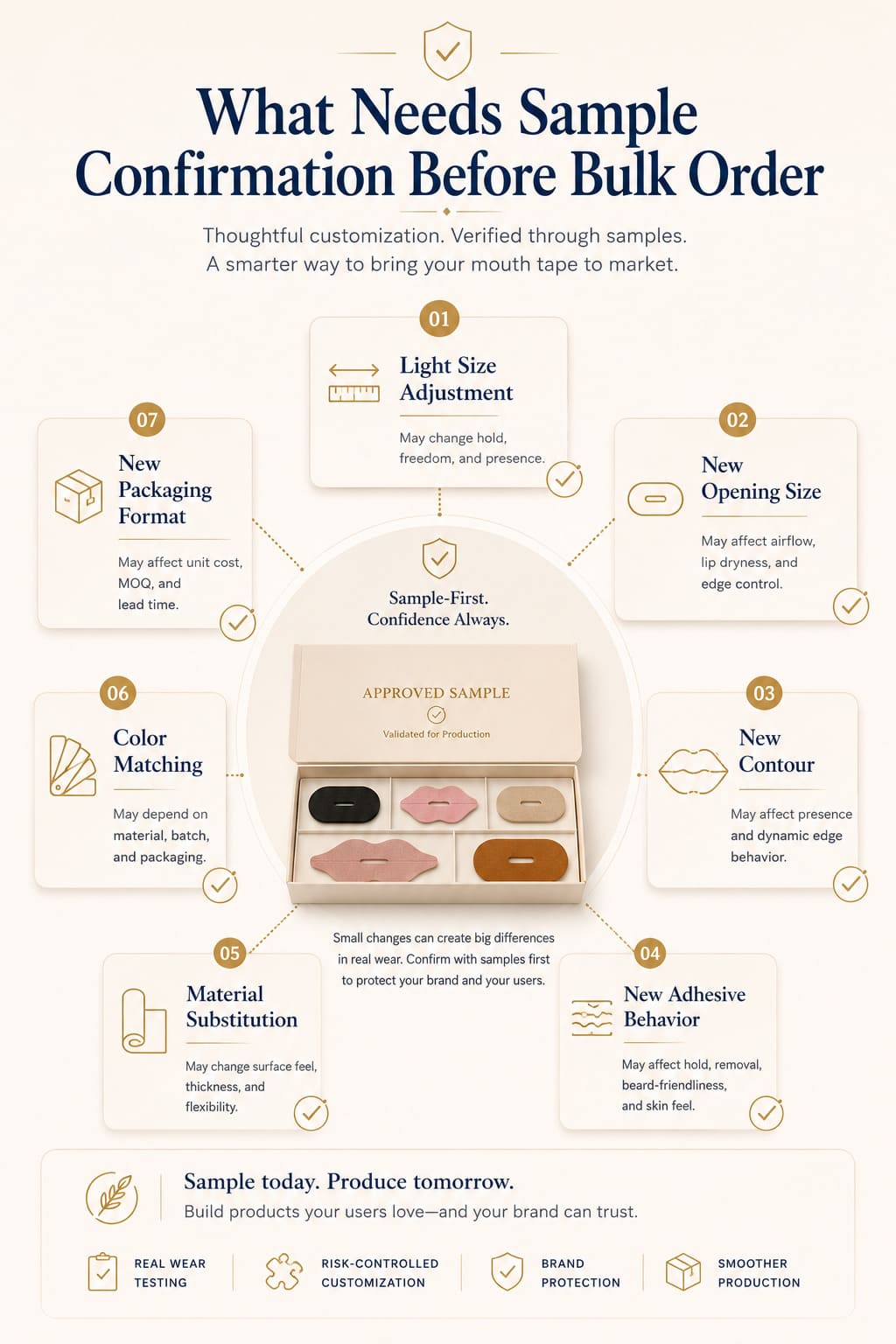
What Needs Sample Confirmation Before Bulk Order
Some requests are possible, but should not be confirmed only on paper. Sample confirmation helps avoid moving into bulk production with a product that looks right but feels wrong.
Confirm by sample before bulk production:
From Design Logic to Private Label Product
Design and adhesive should support the product route. They should not be changed randomly just to make the product look different.
Define Target Users
Understand first-time vs experienced users, skin type, beard concerns, and comfort priorities.
Choose Product Route
Select from low-pressure, balanced, strong-hold, gentle removal, or open-center routes.
Compare Sample Designs
Request route-based sample kit. Compare shape, material, edge behavior, and adhesive feel side by side.
Test Hold & Removal
Test hold, pressure, freedom, removal, and edge behavior. Collect real feedback from sample users.
Adjust Design Direction
Based on sample feedback, adjust design or adhesive direction before finalizing.
Confirm Packaging Story
Align packaging design, branding, and product story with your chosen route and target positioning.
Approve Sample
Approve the confirmed sample before moving to bulk production. Do not skip this step.
Bulk Production
Design and adhesive confirmed. Route aligned. Sample approved. Ready to scale.
Frequently Asked Questions
Request Design and Adhesive Route Samples
Tell us your target users, preferred product route, comfort/security priority, removal concerns, and packaging direction. We can help you compare design and adhesive route samples before customization and bulk production.