Opening Size & Airflow
in Open-Center Mouth Tape
A private label buyer guide to central mouth freedom, airflow concentration, lip dryness, edge control, and sample testing.
Open-center mouth tape can create more central mouth freedom, but opening size changes more than appearance. It affects airflow path, lip dryness, edge stability, perceived freedom, and user acceptance. For private label buyers, opening size should be tested through samples before customization and bulk production.
A Larger Opening Is Not Always Better
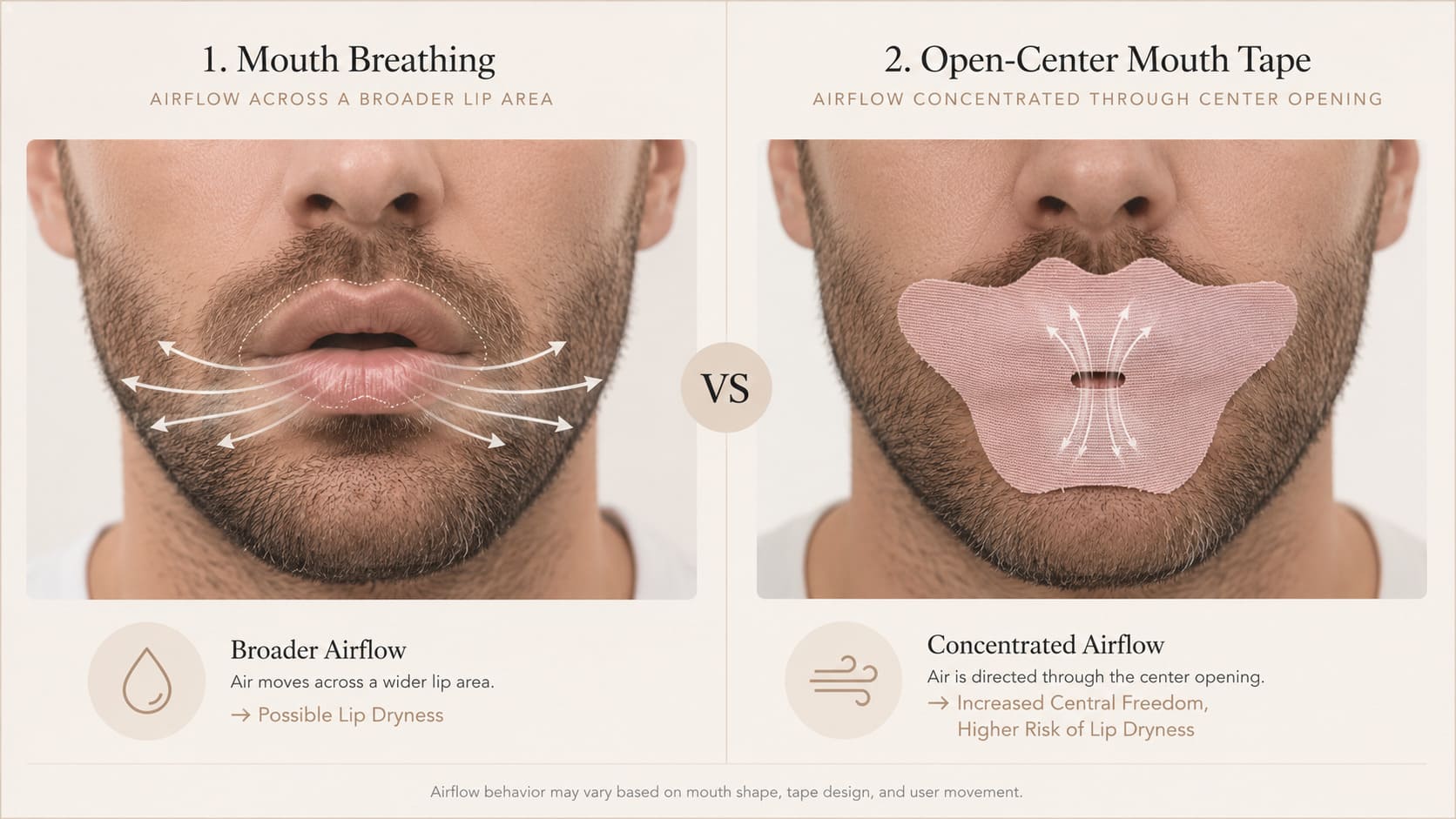
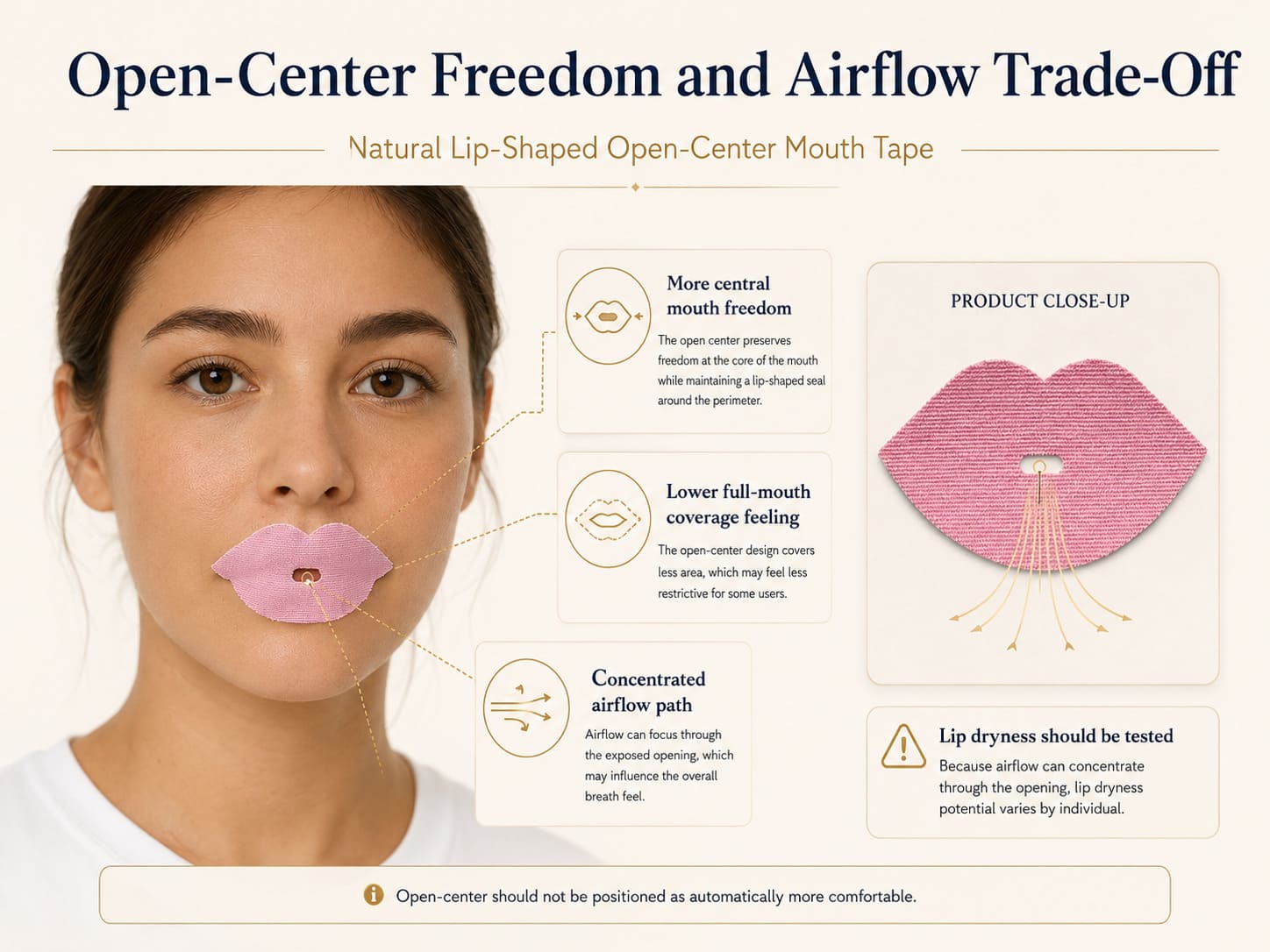
A larger opening may feel freer at the center of the mouth, but it may also create more concentrated airflow and make lip dryness more noticeable.
A smaller opening may feel more controlled and stable, but it may provide less central freedom for the user.
The best opening size depends on the target user, product route, edge control, adhesive behavior, and real sample feedback.
Why Opening Size Matters
Opening size affects how an open-center mouth tape behaves during real use. It is not simply a visual or design detail -- it is a product route decision that shapes the user experience from first application to repeated overnight wear.
A product may look more comfortable because it has a large opening, but real comfort depends on how the opening interacts with material, adhesive, shape, and edge control.
Airflow Is Not Only About Breathability
Many buyers assume open-center mouth tape is always more breathable. The real experience is more nuanced. An opening can create a more concentrated airflow path through the exposed center. This may increase central mouth freedom, but it may also make lip dryness more noticeable for some users.
Buyer testing should go beyond general comfort. It should include specific observations about how the opening changes the user's experience over a full night of wear.
Opening Size Trade-Offs
Opening size should be treated as a product route decision, not only a design detail. Each direction carries distinct benefits and trade-offs that directly affect user acceptance and product positioning.
- +More central freedom
- +Lower full-mouth coverage feel
- +Stronger open-center story
- +More visible differentiation
- −Airflow concentration
- −Lip dryness risk
- −Opening-edge awareness
- −Stability concerns
Small vs Medium vs Large Opening
There is no universal best opening size. Private label buyers should test opening size based on target users and route positioning. The table below provides a practical starting reference.
| Opening Direction | Possible Benefit | Possible Trade-Off | Best Testing Focus |
|---|---|---|---|
|
|
More controlled feel, stronger edge continuity, lower dryness exposure | Less central mouth freedom, weaker open-center differentiation | Hold Pressure Opening Comfort |
|
|
Balance between central freedom and edge stability, broad user fit | Still requires airflow and dryness testing before confirmation | Freedom Airflow Edge Behavior |
|
|
Higher central freedom, stronger open-center product story, visible differentiation | More airflow concentration, higher lip dryness risk, edge awareness increases | Lip Dryness Perimeter Control Movement Stability |
Opening size affects more than visual appearance. Each direction changes airflow path, edge behavior, and lip exposure in ways that are only fully understood through real sample testing with target users.
Edge Control Around the Opening
Open-center designs rely heavily on edge behavior. The opening perimeter is the most structurally complex area of the tape -- it must hold securely while remaining comfortable against the skin boundary of the lips.
A large opening may feel freer, but if the edge is unstable, users may notice the product more. A smaller opening may feel more controlled, but it may not deliver enough freedom for open-center positioning.
The opening edge must be tested during light talking movement, lip-pursing, small chewing motion, facial expression changes, side tension, and repeated application and removal -- not only during static overnight wear.
Edge Test Scenarios
Lip Dryness and User Acceptance
Lip dryness is an important open-center trade-off. When part of the lip area is exposed, airflow may pass through the opening more directly. Some users may feel this as extra freedom. Others may feel dryness or edge awareness.
- Does the user notice dryness?
- Does dryness appear quickly or after longer use?
- Does opening size affect repeat-use acceptance?
- Does the target market prefer freedom or lower dryness risk?
- Does the product story explain the trade-off clearly?
- Does packaging set realistic expectations?
Open-center positioning should not promise unlimited comfort. It should explain freedom and trade-offs clearly to support informed user acceptance.
Which Opening Direction Should a Buyer Test First?
Match your primary buyer goal to the suggested opening direction. These are starting points -- all directions require sample confirmation.
More Central Mouth Freedom
Target users who want to feel less restricted at the center of the mouth during sleep.
Medium or larger opening with careful edge testing for stability and dryness.
Lower Lip Dryness Concern
Target users who are sensitive to lip dryness or who report dryness as a barrier to consistent use.
Smaller opening or compare with full-coverage samples to evaluate dryness difference.
Stronger Edge Stability
Target users who are active sleepers or who need reliable hold through facial movement.
Smaller or medium opening with controlled adhesive layout around the perimeter.
Differentiated Product Story
Brands seeking visible open-center differentiation in retail or direct-to-consumer positioning.
Visible open-center or lip-shaped opening that communicates the product concept clearly.
First-Time User Acceptance
Brands targeting users who have not tried mouth tape before and need low-barrier onboarding.
Balanced opening size, lower presence, softer edge behavior for easier first-use acceptance.
Premium Retail Positioning
Brands requiring a refined, premium-tier product that commands higher retail price points.
Refined opening contour, clean packaging explanation, sample-confirmed comfort before commitment.
What to Test Before Confirming Opening Size
Opening size should not be confirmed from a specification sheet alone. The following checklist helps buyers structure real sample evaluation before customization and bulk production.
From Opening Size to Private Label Product
For private label buyers, opening size should not be customized randomly. It should support the target product route and be confirmed through structured sample testing before any bulk production commitment.
The practical development path follows a clear sequence from user definition through to confirmed sample -- ensuring that each decision is grounded in real feedback rather than specification assumptions.
Start with Open-Center Samples-
01Define Target UsersIdentify user profile, skin sensitivity, sleep habits, and mouth freedom expectations.
-
02Choose Open-Center Route DirectionSelect route positioning: freedom-first, stability-first, or balanced.
-
03Compare Opening Size SamplesTest small, medium, and larger opening samples side by side with target users.
-
04Test Airflow, Freedom, Dryness, Edge, RemovalUse the sample testing checklist to collect structured feedback.
-
05Adjust Opening, Adhesive, Material, PackagingRefine based on sample feedback before moving to customization.
-
Confirm Sample Before Bulk ProductionFinal sample sign-off before customization and bulk order placement.
Opening Size & Airflow: Buyer FAQ
Is a larger opening always better for open-center mouth tape?
Does open-center mouth tape always feel more breathable?
What opening size is best for first-time users?
Can opening size be customized?
How does opening size affect edge control?
Should buyers compare open-center with full coverage?
Request Open-Center
Opening Size Samples
Tell us your target users, mouth freedom expectations, airflow concerns, lip dryness sensitivity, and packaging direction. We can help you compare open-center mouth tape samples before customization and bulk production.