Mouth Tape Route
Selection Guide
A private label buyer guide to choosing low-pressure, balanced hold, strong hold, full-coverage, open-center, and gentle-removal mouth tape routes.
Before changing shape, material, adhesive, color, or packaging, private label buyers should first understand the product route. Different mouth tape routes create different trade-offs in hold, comfort, mouth freedom, presence, removal feel, airflow, and user acceptance.
Start With the Product Route
A mouth tape route describes how the product should feel and behave. For example:
Lower presence and easier acceptance for first-time users.
Middle ground between comfort, hold, and freedom.
More secure and controlled feel for experienced users.
Unified coverage across the mouth area.
Central mouth freedom with airflow trade-offs.
Softer release feel and repeat-use acceptance.
The best route depends on target users, buyer goals, packaging story, and real sample feedback. No single route is best for all buyers. Route selection is the starting point -- not the final decision.
Why Route Selection Comes
Before Customization
Many buyers begin with questions like:
- -- Can we change the shape?
- -- Can we use another material?
- -- Can we make the adhesive stronger?
- -- Can we make the opening larger?
- -- Can we customize color and packaging?
These are valid questions -- but they should come after route selection. Small changes in shape, material, adhesive, opening size, or footprint can change:
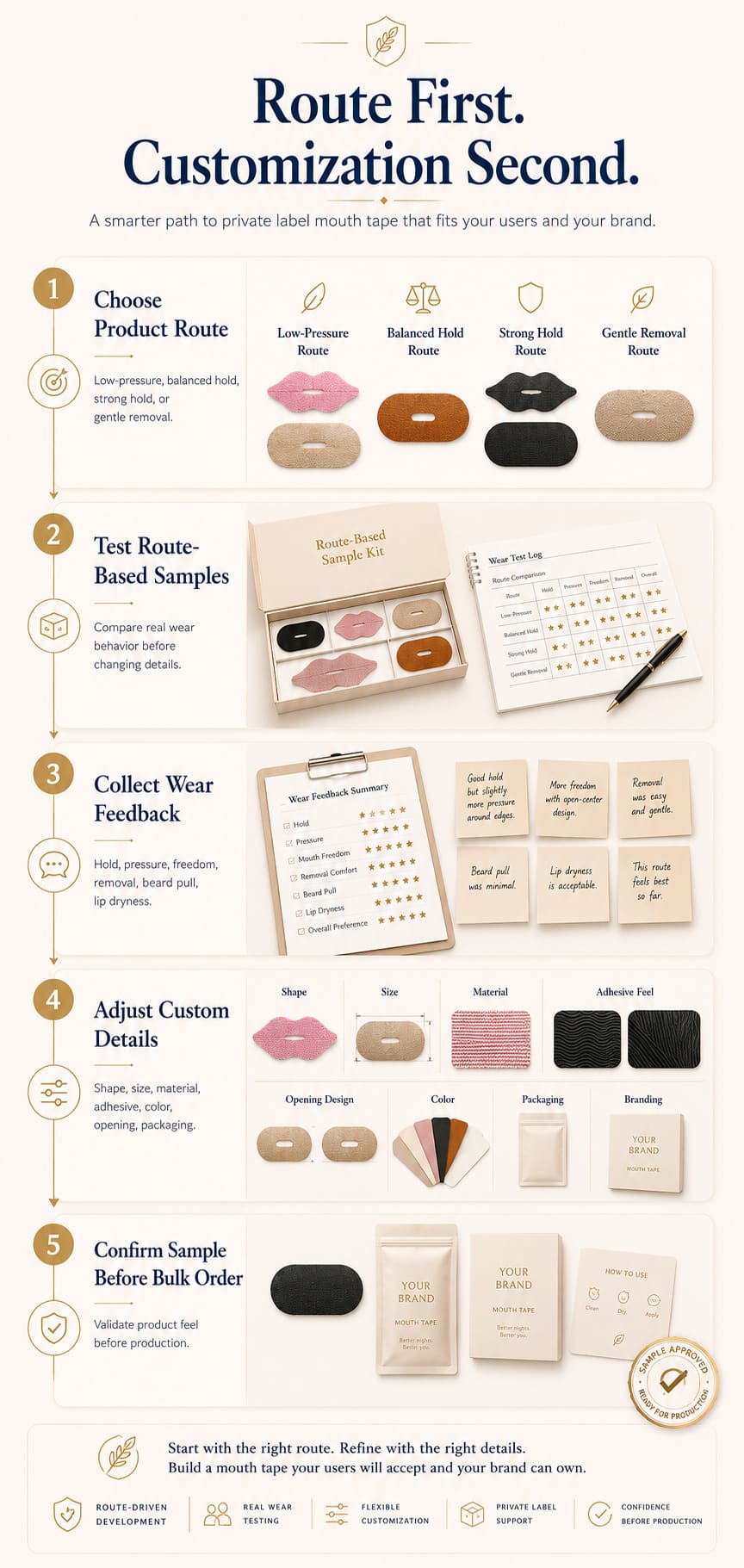
- 1 Define target users
- 2 Choose product route
- 3 Compare route-based samples
- 4 Collect sample feedback
- 5 Adjust details
- 6 Confirm samples before bulk order
The Main Mouth Tape
Route Spectrum
Mouth tape is not only strong or weak. Most private label projects sit somewhere across a route spectrum -- from low pressure to balanced hold to strong hold. Understanding where your product sits helps buyers choose the right starting samples.
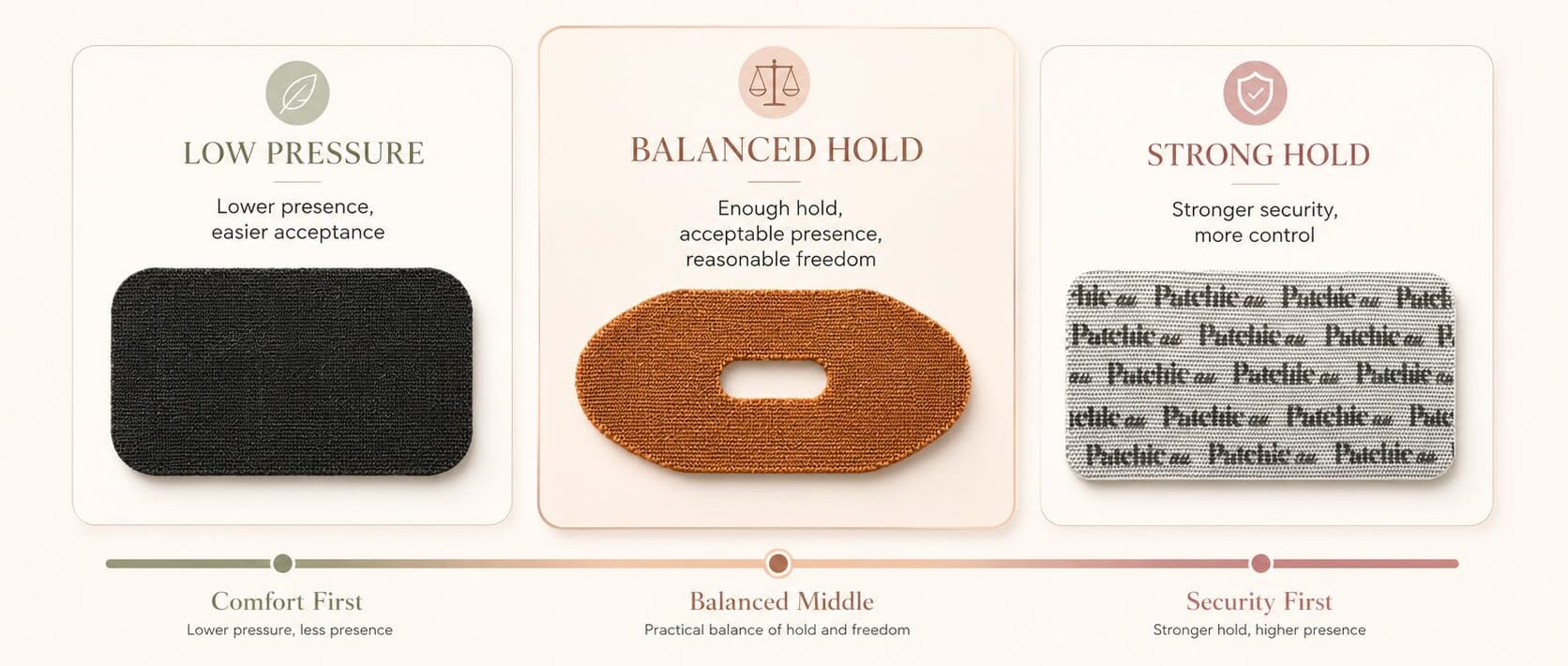
Lower presence, easier first-use acceptance, comfort-led positioning.
Enough hold, acceptable presence, reasonable user freedom. Often the best first-SKU starting point.
More secure, more controlled, and reassuring for users who want stronger hold.
Balanced hold often becomes a practical middle ground for buyers who need enough hold, acceptable presence, and reasonable user freedom. Low pressure may support starter-friendly or comfort-led products. Strong hold may support more secure and controlled products.
Common Mouth Tape Routes for
Private Label Buyers
Each route reflects a different product direction. Understanding the trade-offs helps buyers choose the right starting point before requesting samples.
Low-Pressure Route
Lower presence, easier first-use acceptance, softer edge behavior, and comfort-led positioning.
Balanced Hold Route
A practical middle ground between comfort, hold, freedom, and user acceptance.
Strong Hold Route
More secure, more controlled, and more reassuring for users who want stronger hold.
Full-Coverage Route
Unified coverage across the mouth area. Can be low-pressure, balanced, or strong depending on material, adhesive, and size.
Open-Center Route
Central opening with more mouth freedom and airflow trade-offs. Differentiated product story.
Gentle-Removal Route
Focused on softer release feel, beard-friendliness, and repeat-use acceptance.
Key Decisions Buyers Should Make
Before Sampling
These six decisions shape which route is right for your product and which samples are worth testing.
Comfort vs Security
Does the buyer prioritize lower presence and easier acceptance, or stronger control and secure hold?
Full Coverage vs Open-Center
Does the target user prefer unified coverage across the mouth area, or central mouth freedom with airflow trade-offs?
Cotton Feel vs Rayon Feel
Should the product feel more natural and airy, or smoother and more refined? Material surface feel affects user acceptance.
Opening Size & Airflow
How much central freedom is needed? What airflow trade-off is acceptable? Opening geometry affects lip dryness and edge behavior.
Design & Adhesive Logic
Should the product feel relaxed, balanced, strong, or gentle-removal focused? Adhesive layout and shape work together.
Packaging Story
Does the packaging explain comfort, security, freedom, or gentle removal clearly? Route choice shapes the packaging narrative.
Supporting Guide Pages for
Private Label Buyers
Each guide page explores one decision dimension in depth. Use them to understand trade-offs before requesting route-based samples.
Full Coverage vs Open-Center Mouth Tape
Understand coverage, mouth freedom, airflow behavior, edge control, and user acceptance.
Opening Size & Airflow in Open-Center Mouth Tape
Understand how opening size affects airflow concentration, lip dryness, edge behavior, and central mouth freedom.
Low Pressure vs Strong Hold Mouth Tape
Compare pressure, hold, presence, removal feel, and buyer positioning across the hold spectrum.
Cotton Feel vs Rayon Feel in Mouth Tape
Compare material surface feel, density, softness, presence, and route fit for private label planning.
Design & Adhesive Logic in Mouth Tape
Understand how shape, adhesive layout, edge behavior, and removal feel work together in product design.
Mouth Tape Customization Options
Learn how route selection connects to shape, size, material, adhesive, color, packaging, and branding decisions.
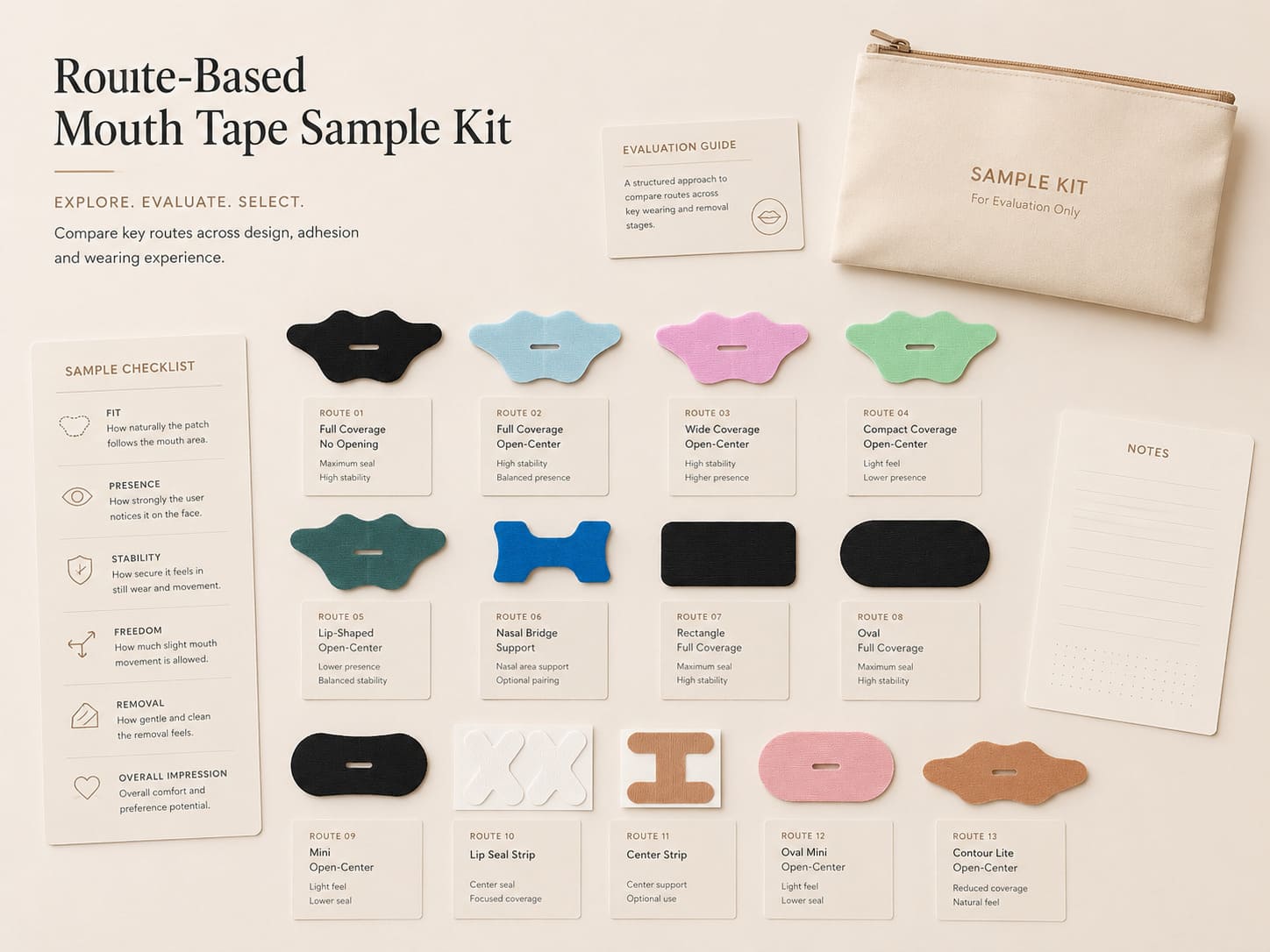
Compare Samples
Before Customization
A private label buyer should not judge a mouth tape route only by photos or material names. Route-based sample testing helps buyers compare real product behavior before committing to customization.
Sample testing helps buyers evaluate:
This makes customization safer and more practical. Buyers who test route-based samples before finalizing details are better positioned to confirm samples before bulk production.
Route First.
Customization Second.
After choosing and testing the product route, buyers can adjust the details. The goal is not to customize everything at once -- it is to create a private label product that matches target users and can be confirmed before bulk production.
After route selection, buyers can adjust:
Which Route Should a Buyer
Start With?
Use this matrix as a starting reference. The best route depends on target users and real sample feedback -- this is a guide, not a formula.
| Buyer Goal | Suggested Starting Route |
|---|---|
| First-time user acceptance | Low-pressure or balanced hold |
| Broad retail first SKU | Balanced hold route |
| Stronger security feeling | Strong hold or secure full-coverage |
| More central mouth freedom | Open-center route |
| Lower lip dryness concern | Full coverage or smaller-opening open-center |
| Softer removal feel | Gentle-removal route |
| Beard-friendly positioning | Gentle-removal or softer release profile |
| Premium retail presentation | Rayon-feel, balanced hold, or refined contour |
| Hospitality or trial kit | Low-pressure or balanced hold |
| Functional secure line | Strong hold with sample-confirmed removal |
* This matrix is a starting reference only. Route selection should always be confirmed through route-based sample testing with real users before customization and bulk production.
Related Resources & Collections
Frequently Asked
Questions
Common questions from private label buyers about mouth tape route selection, sampling, and customization.
View Full FAQ →What is a mouth tape route?
Should we choose material first or product route first?
Is low-pressure mouth tape weaker?
Is open-center mouth tape always more comfortable?
What is the safest route for a first private label order?
Can we customize after choosing a route?
Why is sample testing important?
Request Route-Based
Mouth Tape Samples
Tell us your target users, comfort/security priority, preferred route direction, material preference, opening needs, and packaging plan. We can help you compare route-based samples before customization and bulk production.