Low-Pressure
Mouth Tape Routes
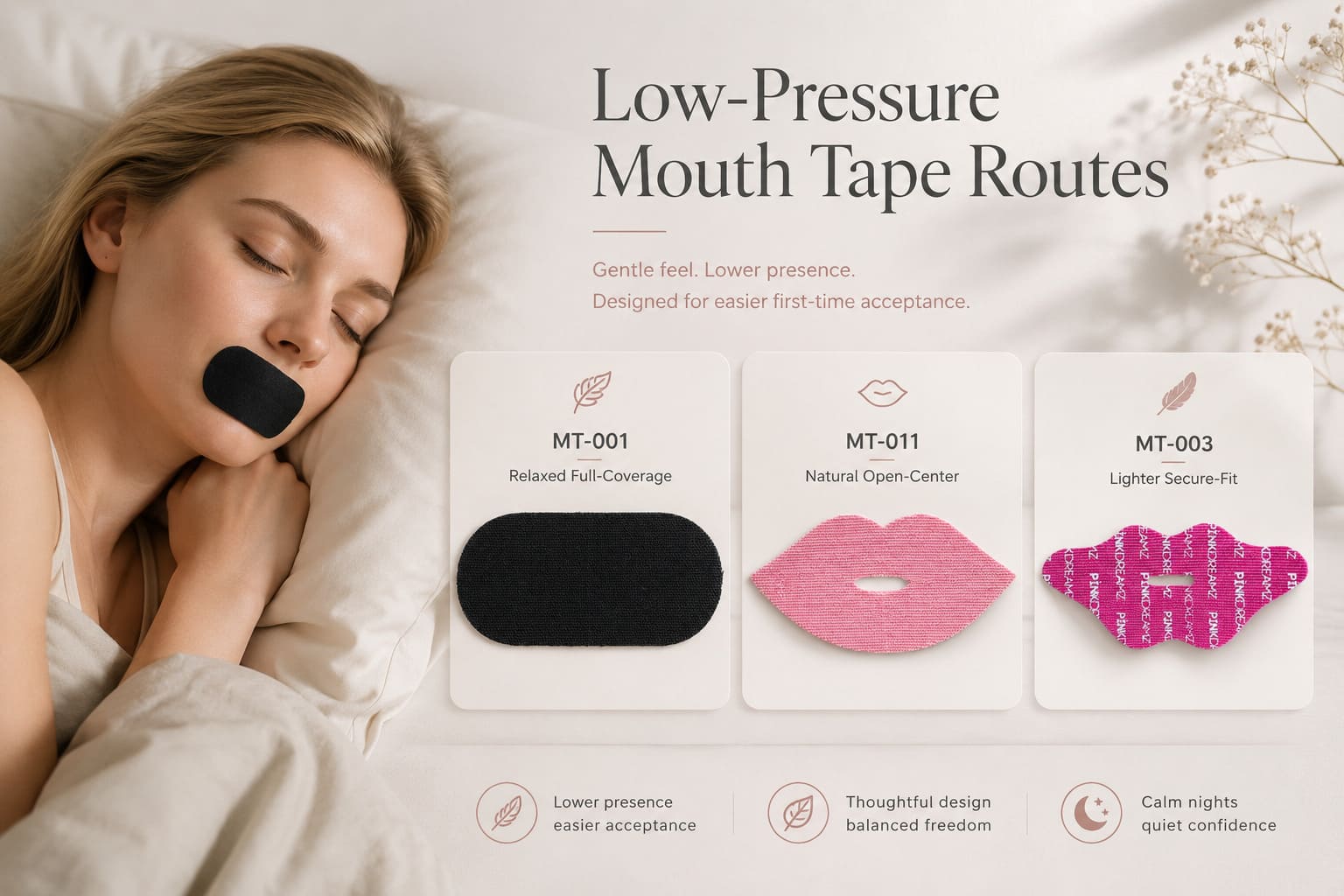
For private label buyers looking for a softer, lower-presence mouth tape experience--without reducing product selection to material names alone.
For many first-time users, the biggest barrier is not the material name. It is the feeling of pressure, restriction, or "something is forcing my mouth shut." A low-pressure route helps brands build a softer entry point: lower perceived presence, easier user acceptance, and a more natural sleep/wellness product feel.
01
Route PhilosophyLow-Pressure Mouth Tape Routes
For private label buyers looking for easier first-time acceptance, lower perceived pressure, and a softer overnight mouth tape experience.
Not every mouth tape needs to feel locked down to work.
For many first-time users, the biggest barrier is not the material name. It is the feeling of pressure, restriction, or "something is forcing my mouth shut." A low-pressure mouth tape route is built for brands that want a softer entry point: lower perceived presence, easier user acceptance, and a more natural sleep/wellness feel.
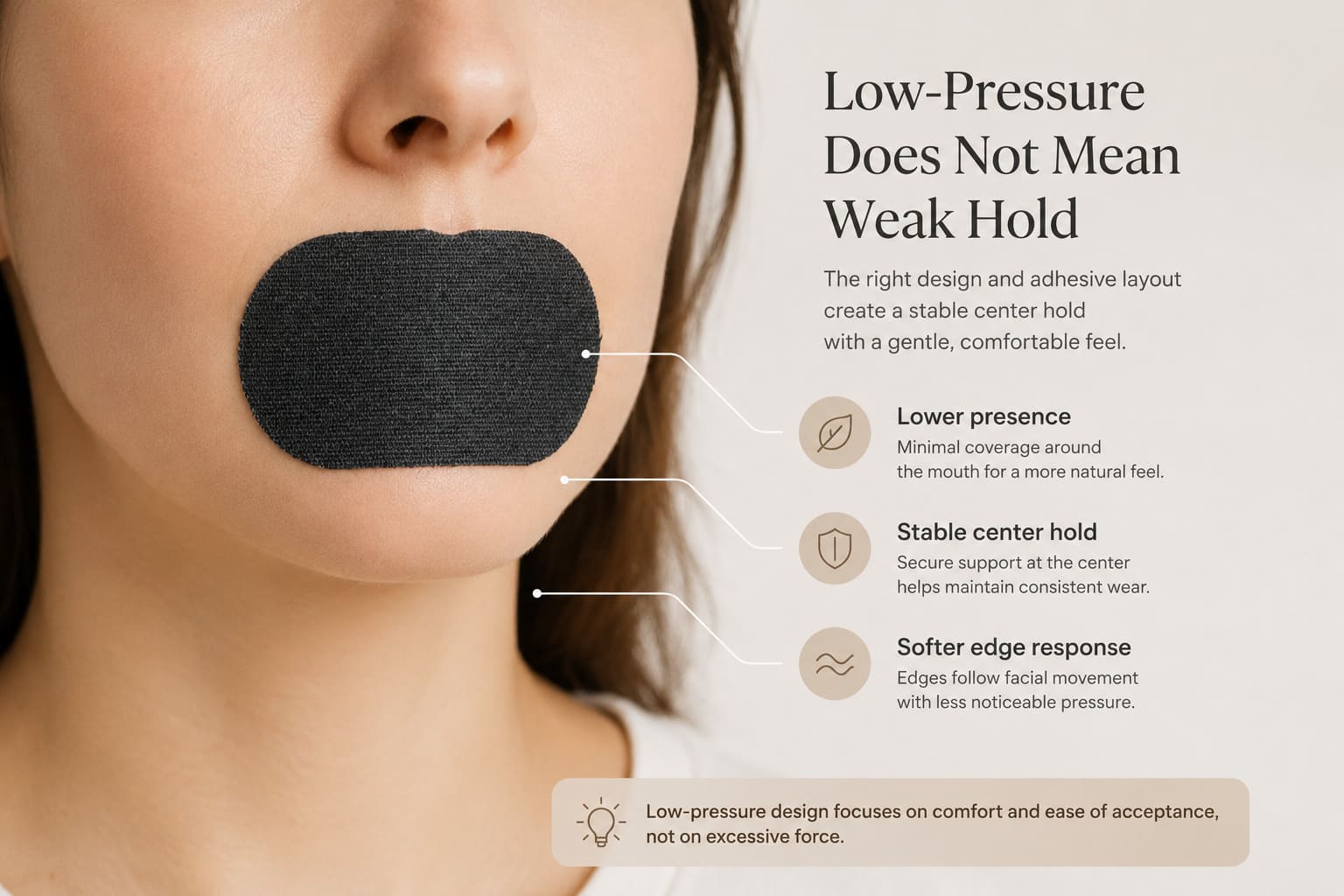
This does not mean weak hold.
It means the patch should feel easier on the face while still staying secure enough for normal overnight use. In our route selection process, we do not classify mouth tape only by supplier labels such as cotton, rayon, silicone, or non-woven. The real user experience comes from the full combination of material, adhesive, shape, size, edge behavior, and how the patch responds during actual mouth movement.
For private label buyers, this matters. The first experience often decides whether a user will try mouth tape again.
"A softer route is not automatically a weaker route. It is usually a different promise."
02
Route Logic
What "Low-Pressure" Means
in Mouth Tape Selection
Low-pressure is not just a soft material claim. A mouth tape can be made from a soft fabric and still feel restrictive if the shape, adhesive layout, or edge behavior creates too much pulling around the lips.
Another patch may not feel extremely soft in the hand, but may feel easier on the face because the coverage area, contour, and hold pattern reduce psychological pressure.
In practical product selection, a low-pressure route usually means one or more of the following:
Lower presence after application
Less locked-down mouth feel
Softer edge response
Reduced inward pulling
More natural sleep accessory impression
Easier repeat-use acceptance
This is why we treat low-pressure mouth tape as a wear-experience route, not a material category.
A supplier description can tell us the declared material and adhesive system. It cannot fully tell us whether the patch feels relaxed, whether the lower edge releases during movement, or whether the user feels psychologically comfortable enough to use it again.
03
Buyer FitBest-Fit Buyer Profiles
Low-pressure routes are best suited for B2B buyers who want mouth tape to feel approachable, not aggressive.
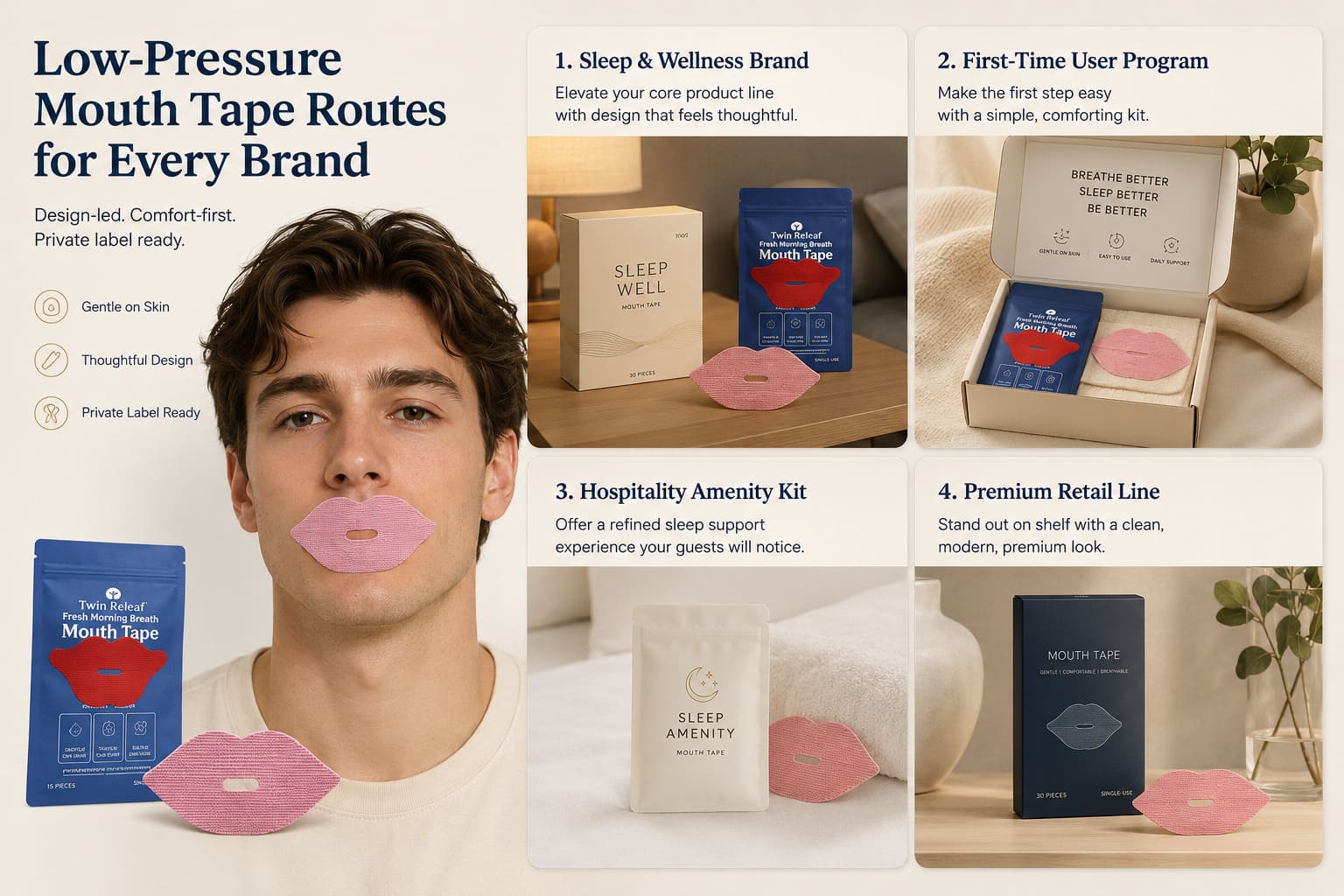
Sleep & Wellness Brands
For brands building a softer nightly routine product where comfort, acceptance, and repeat use matter.
First-Time User Programs
For private label launches targeting people who may be trying mouth tape for the first time.
Hospitality & Amenity Kits
For trial-friendly guest experiences where the product should feel low-barrier and easy to accept.
Premium Retail Lines
For buyers who want a cleaner, less functional-looking sleep accessory with a refined product story.
Acceptance-Led Brands
For product lines where repeat-use acceptance matters more than the strongest possible locked-in hold.
Less suitable for
- Maximum lock-down positioning
- Heavy control messaging
- Strongest possible hold as the main product promise
For those cases, a stronger-control route may be a better fit.
04
Route Evaluation
How We Identify
a Low-Pressure Route
Most supplier pages describe mouth tape with broad words: soft, breathable, skin-friendly, hypoallergenic, comfortable.
Those words are useful, but they are not enough.
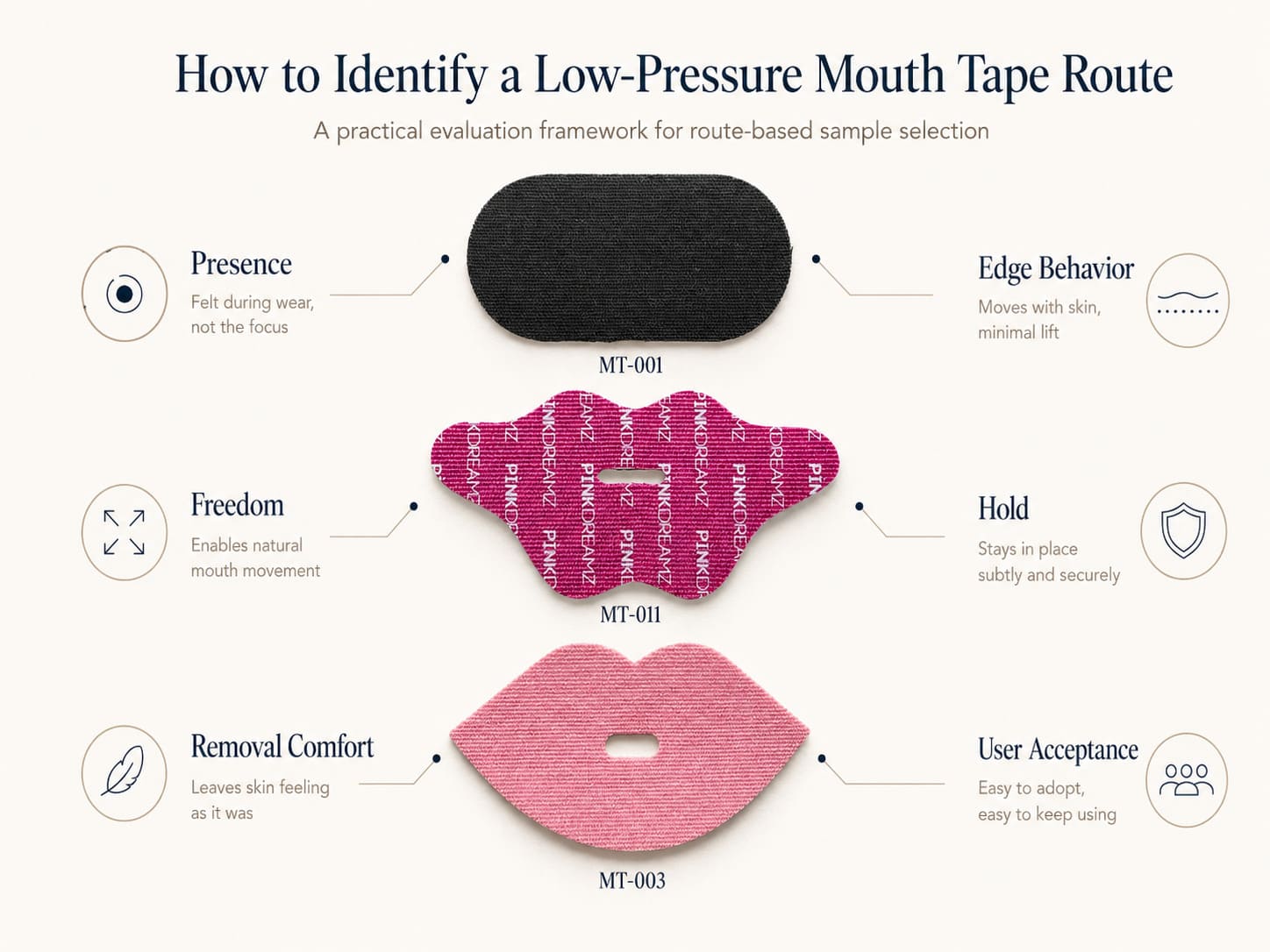
In actual route selection, we look at behavior that affects real use:
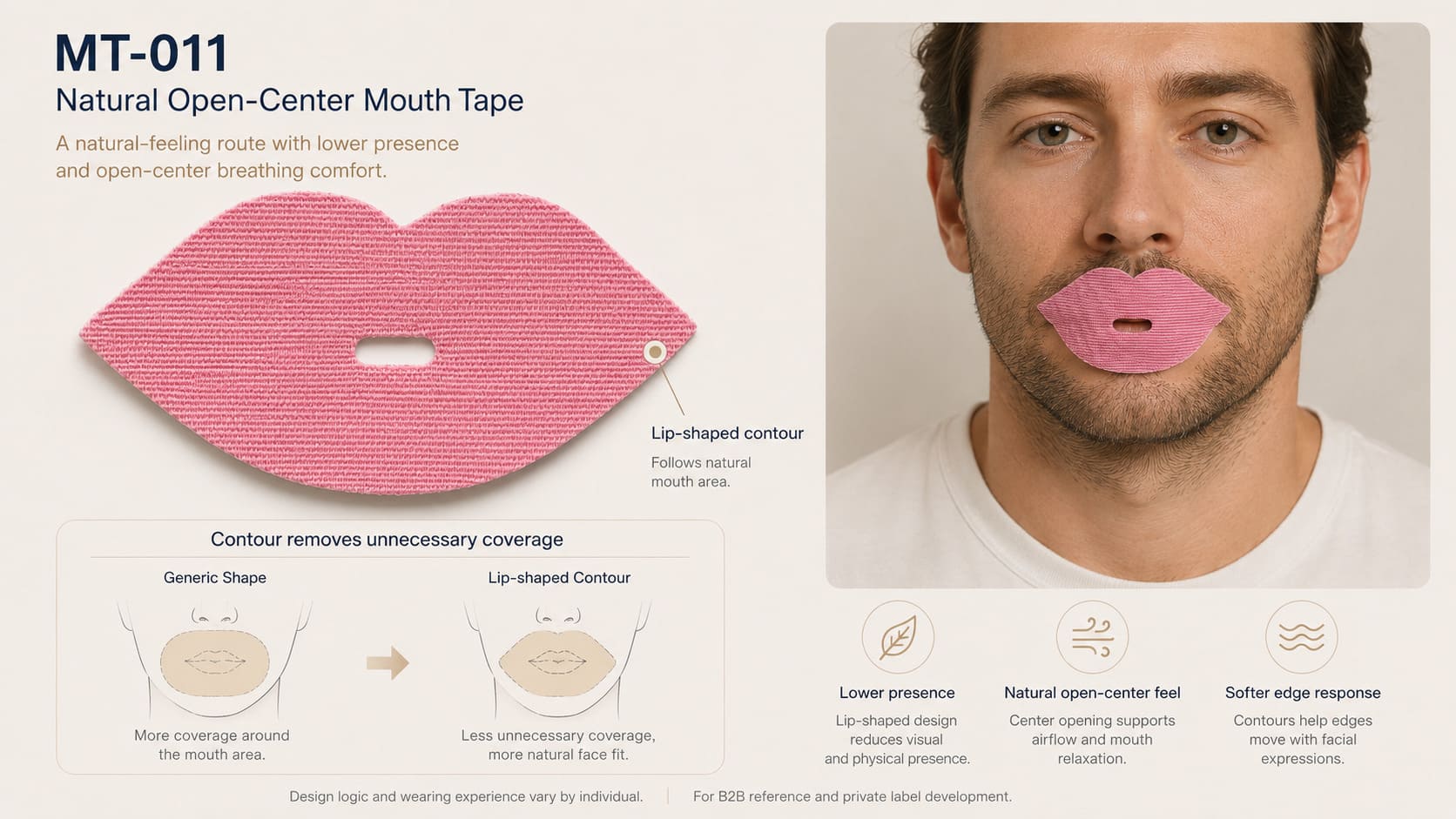
This is where material names alone become limited. For example, a cotton full-coverage route can feel thin, relaxed, and lower in pressure. A different cotton route with a different adhesive stripe pattern can feel more horizontally gathered and more controlled. A lip-shaped open-center route can reduce perceived presence by removing unnecessary coverage, even when the material family is similar.
That is the difference we care about.
Not just what the patch is called, but how it behaves.
Route Evaluation Checklist
Does the center hold without making the whole mouth feel locked?
Does the edge feel harsh, or does it allow a softer response?
Does the patch feel secure in still wear?
What happens during chewing, pouting, or small mouth movements?
Does the user feel relaxed enough to keep wearing it?
Does the shape reduce unnecessary coverage around the mouth?
Does the design create lip dryness, edge pressure, or inward pulling?
05
Candidate RoutesCandidate Product Routes
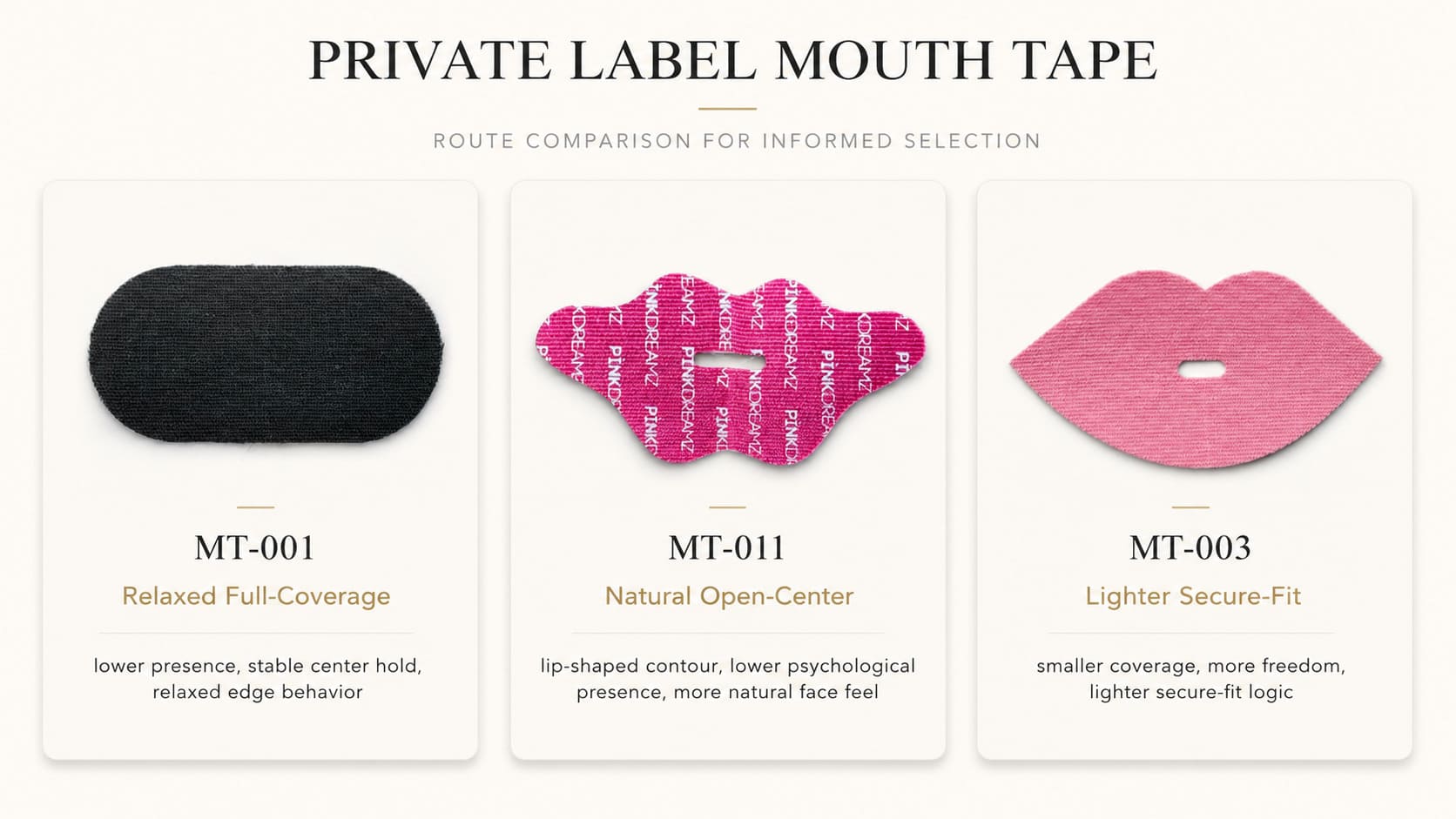
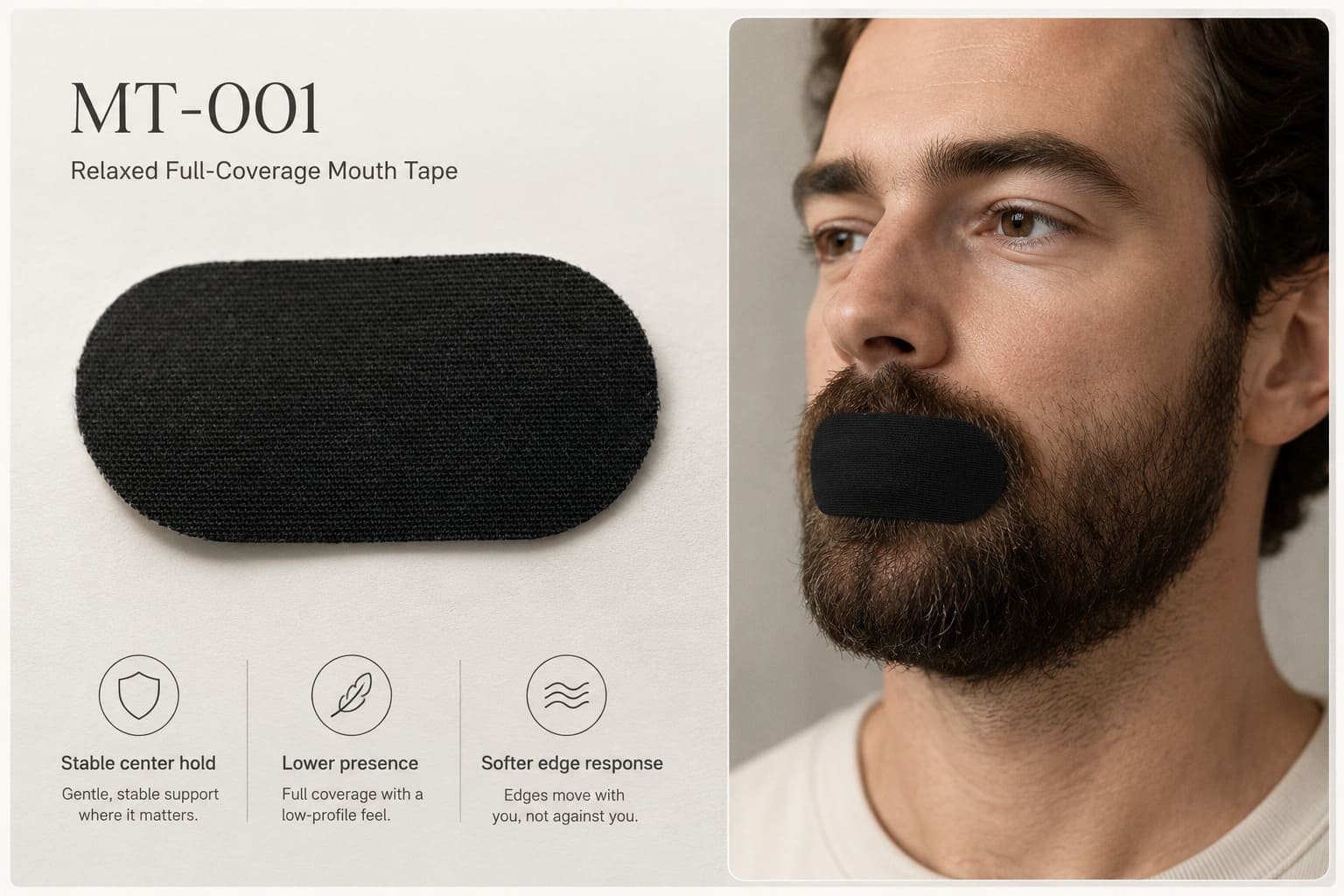
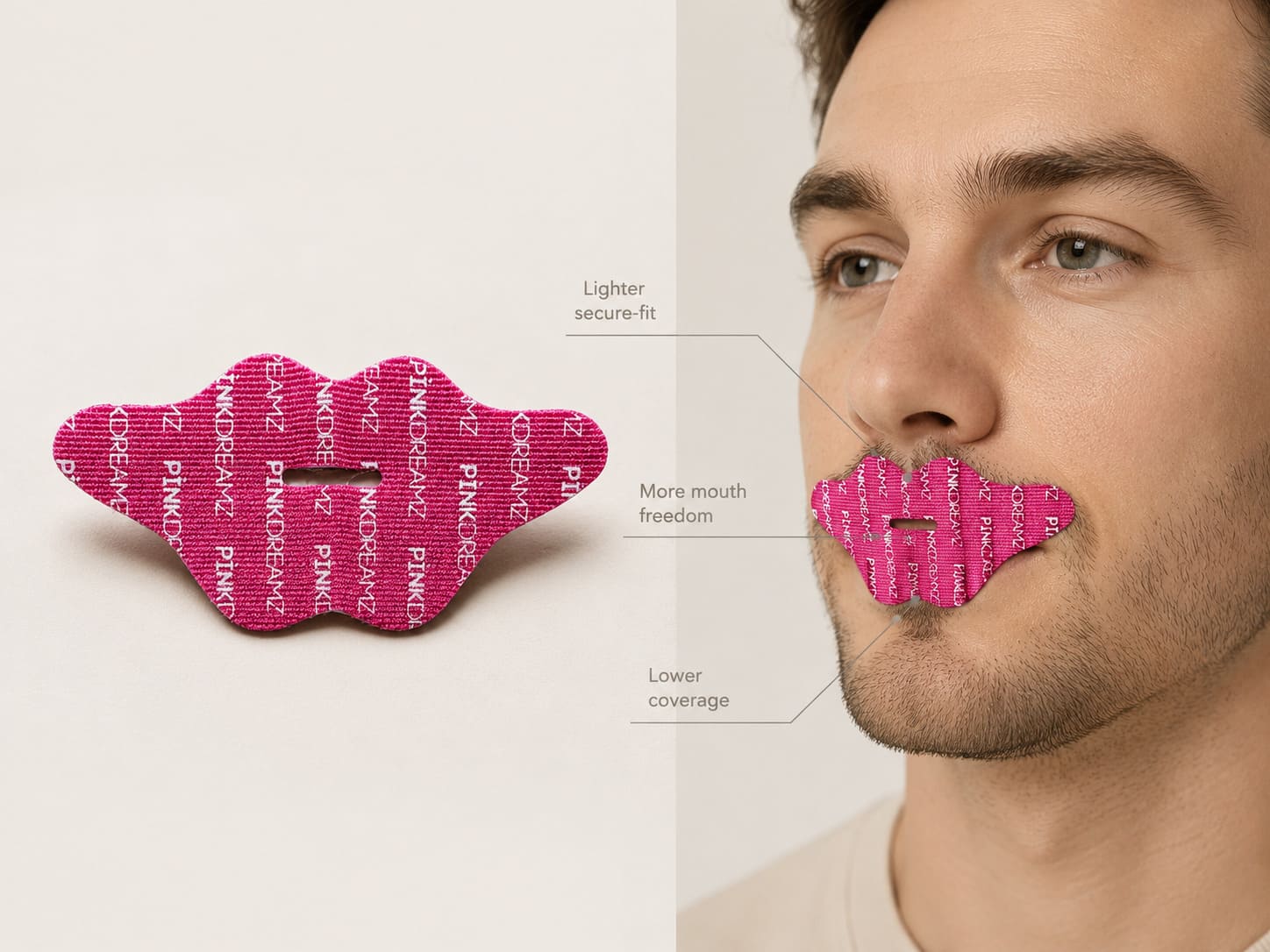
Below are current examples that fit the low-pressure direction. These are not "consumer recommendations." They are product-route examples for private label selection.
Related Route Guides
06
Route ComparisonRoute Comparison
A quick-reference guide for B2B buyers selecting low-pressure routes for their product range.
| Route Example | Best Fit | Presence | Hold Feel | Main Trade-Off |
|---|---|---|---|---|
| MT-001 | Relaxed full-coverage route | Low | Medium | Not the strongest edge control |
| MT-011 | Natural open-center route | Low | Medium | Edge loosens easier during movement |
| MT-003 | Lighter secure-fit route | Low / Medium | Medium | Less reassurance than stronger-control routes |
MT-001
Relaxed full-coverage route
Trade-Off: Not the strongest edge control
MT-011
Natural open-center route
Trade-Off: Edge loosens easier during movement
MT-003
Lighter secure-fit route
Trade-Off: Less reassurance than stronger-control routes
Note: Use this comparison as a route-selection starting point, not as a universal ranking. The right route depends on target users, packaging promise, and expected wear behavior.
07
Trade-Offs
Trade-Offs Buyers
Should Understand
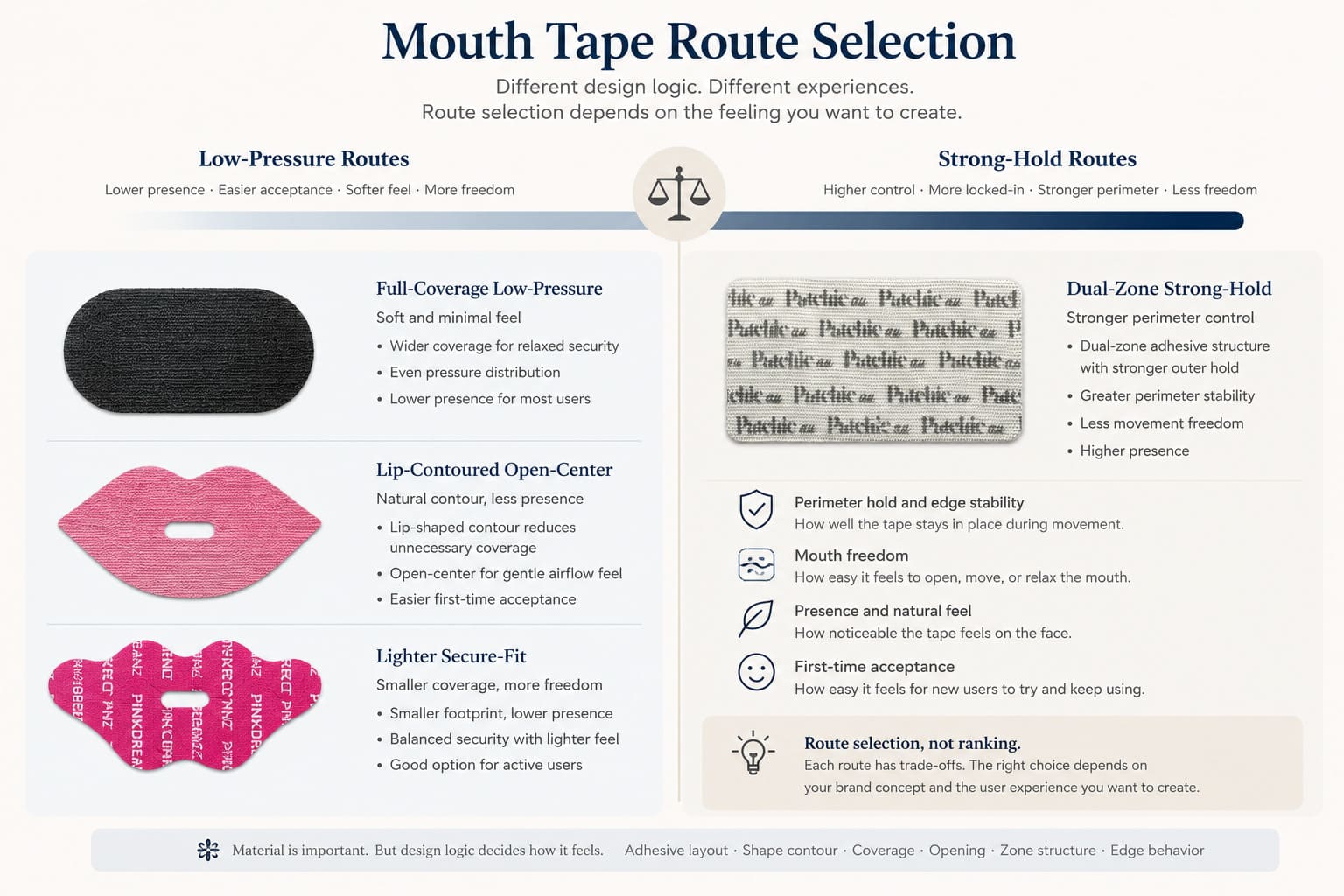
Low-pressure routes are not the best answer for every product line.
Their main advantage is easier acceptance. Their main trade-off is that they may not create the same locked-in feeling as strong-hold routes.
Some low-pressure designs may allow more dynamic edge release during larger mouth movement. Some open-center designs may increase mouth freedom but also make lip dryness more noticeable because airflow is concentrated through the center opening.
For a first private label mouth tape program, this route can be a safer starting point when the target user is new to mouth taping.
For a more performance-led product line, or for users who already know they want stronger hold, a stronger-control route may be more appropriate.
"Low-pressure is a product promise. Strong hold is another product promise. The wrong route creates the wrong expectation."
08
Route DecisionWhen to Choose This Route
Choose a low-pressure route if your product goal is:
- Easier first-time user acceptance
- Lower perceived pressure
- Softer sleep/wellness positioning
- Less control-heavy product feel
- Better fit for trial kits, starter programs, or amenity use
- A calmer private label product experience
Choose another route if your end users mainly care about:
- Strongest possible edge hold
- Very secure locked-in feeling
- Less movement freedom
- Functional or control-first positioning
09
B2B Selection NotesB2B Selection Notes
For private label buyers, low-pressure mouth tape is often not about choosing the softest material on paper. It is about selecting a route that matches the target user.
Hold
Presence
Freedom
Removal Comfort
Edge Behavior
Psychological Acceptance
A hospitality amenity program may need a lower-barrier, less intimidating option. A premium wellness brand may prefer a natural-looking contour and softer presence. A more functional sleep brand may decide that strong hold matters more than acceptance.
That is why we separate product routes by actual wear behavior -- not just by material names.
Hold
Presence
Freedom
Removal Comfort
Edge Behavior
Psychological Acceptance
Not just by material names.
10
Responsible Wellness PositioningResponsible Wellness Positioning
For private label buyers, product comfort is only one part of route selection. The product message also needs to stay responsible. Mouth tape should be positioned as a sleep/wellness accessory route, not as a medical treatment.
Avoid Medical Overclaiming
Authoritative sleep and health sources discuss mouth taping with caution, especially for people with snoring, breathing problems, or suspected sleep-related concerns. For this reason, this page keeps the product language focused on comfort, route selection, and private label positioning rather than treatment claims.
Evaluate Adhesive Comfort
Because mouth tape is applied to facial skin, buyers should evaluate adhesive feel, removal comfort, and skin sensitivity -- not only material names. Dermatology guidance commonly recognizes that adhesive-sensitive skin may require gentler tape choices or alternative approaches.
Keep Wellness Positioning Low-Risk
Private label packaging should avoid disease diagnosis, treatment, or cure claims. A safer route is to position the product around general wellness, comfort, user acceptance, and routine support.
11
Sample Request
Request Low-Pressure
Route Samples
Need help choosing a low-pressure mouth tape route for your private label program? Send us your target market, preferred packaging style, and user positioning. We can recommend sample options based on hold, presence, freedom, removal comfort, and brand fit.
- Request low-pressure route samples
- Compare low-pressure vs strong-hold routes
- Ask for private label packaging options
- Share your target user profile for route recommendation
12
FAQFrequently Asked Questions
B2B-focused answers on low-pressure mouth tape route selection, private label programs, and sample evaluation.
No. Low-pressure refers to lower perceived presence and a softer wearing experience. A low-pressure route can still maintain acceptable hold for normal overnight-style use. The difference is that it prioritizes easier acceptance and comfort over a strongly locked-in feel.
No. Material matters, but the actual wearing experience also depends on adhesive layout, shape, coverage area, edge behavior, opening design, and how the patch responds during mouth movement.
For many first-time users, MT-001 or MT-011 may be easier starting points because they focus on lower perceived pressure and lower psychological burden. The final choice depends on whether the buyer prefers full coverage or a more natural open-center contour.
Open-center designs expose the lip area. Airflow can become concentrated through the center opening, which may make lip dryness more noticeable for some users. This is why opening design should be evaluated as part of the route, not assumed to be automatically more comfortable.
No. MT-001 is better understood as a relaxed full-coverage route with low presence and stable center hold. Buyers who want stronger perimeter control may need to compare stronger-control routes.
Yes. These routes can be used as private label sample directions. The route should be selected first, then packaging language, branding, and customization details can be matched to the intended user experience. See our customization options for more detail.
Material name is useful, but it should not be the only selection standard. A route-based sample comparison gives buyers a clearer understanding of hold, presence, freedom, edge response, removal comfort, and user acceptance. See our Route Selection Guide for a full framework.